
How to Wear a Motercycle Vest in the Summer

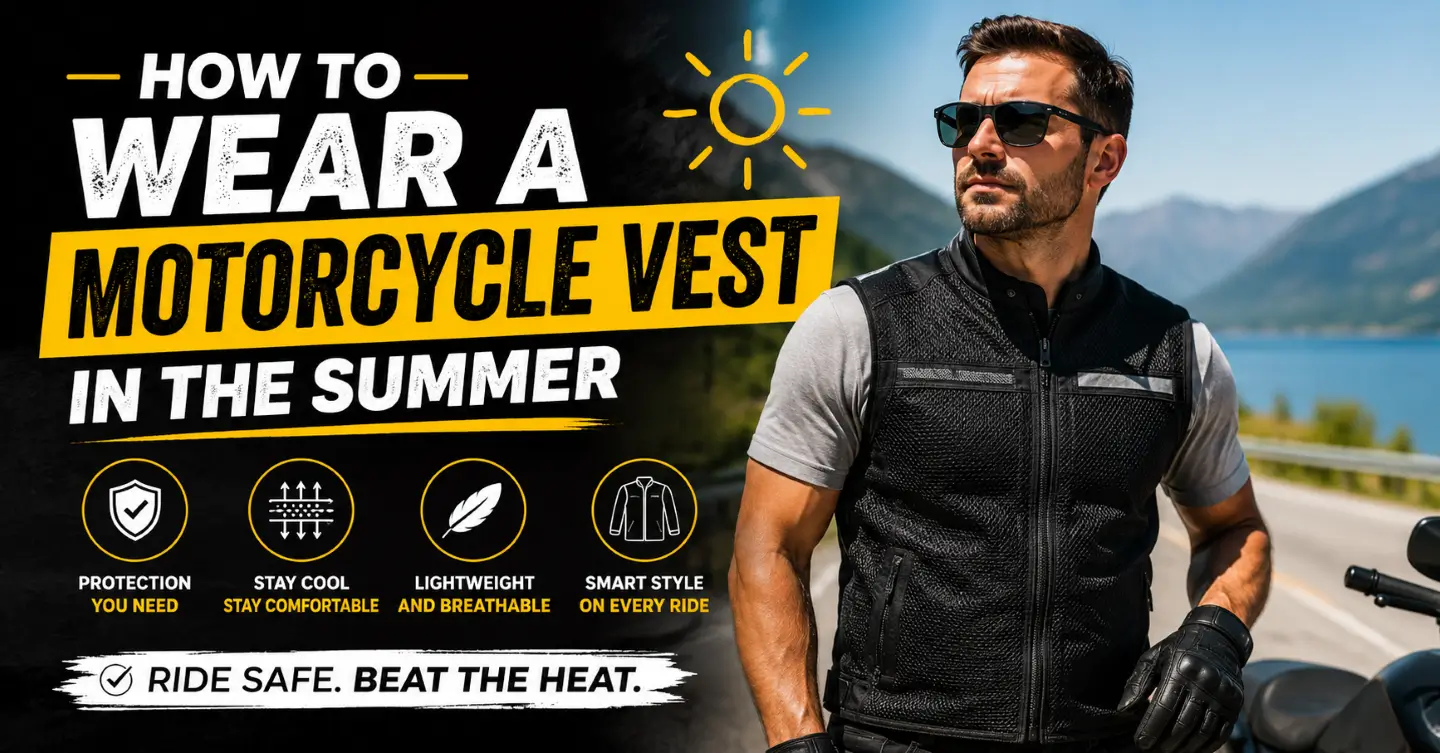
Wearing a vest in the summer on a motorcycle starts with what you put on underneath it. A cotton T-shirt absorbs sweat and holds it against your skin, trapping heat instead of releasing it. A moisture-wicking synthetic base layer moves that moisture outward and lets riding airflow carry it away through the vest material.
That single change makes a bigger difference than most riders expect; it completely transforms how any summer vest actually performs on a hot day.
Vest vs Full Jacket in Summer Heat
A summer motorcycle vest covers the torso and leaves the arms free. Arms are actually one of the body’s most effective heat-release zones, so keeping them exposed or covered only in a light base layer reduces total body heat load significantly compared to wearing a full jacket. Riders who deal with stop-and-go city traffic on hot days, or who ride at speeds where a full mesh jacket starts to feel like too much, reach for a vest on the hottest riding days of the year.
The vest also layers well across changing conditions. Over a full-mesh jacket it adds a wind-resistant front panel on cool mornings. On its own over a base layer, it delivers maximum airflow when the afternoon temperature pushes past 90°F. One piece of gear that covers more temperature range than most people initially expect.
Best Materials for a Summer Motorcycle Vest
Mesh motorcycle vests give the best airflow of any vest material. Open panels on the front and back push ambient air directly over your core while you ride. Mesh works best in dry-heat conditions, where the air itself does the cooling work.
In regions where humidity stays above 70 percent, mesh alone can’t solve the problem. The body cools by evaporating sweat, and humid air slows evaporation regardless of how much airflow the vest generates. Riders in humid coastal areas need a moisture-wicking base layer to move sweat away from the skin first — then the mesh vest exposes that moisture to the wind where it can actually evaporate.
Perforated leather vests keep the classic look and slide protection of leather while opening up the panels for airflow. Lightweight cowhide at 1.0 to 1.2mm outperforms 1.4mm or heavier steerhide significantly in hot-weather comfort. Six Gear’s summer breathable vests use open-panel mesh construction with chest and spine protective padding built in for full-season hot-weather riding.
Getting the Fit Right on Your Vest
A vest running too loose flaps at highway speeds, creates drag, and lifts the back panel away from your body during acceleration. One running too tight restricts breathing on long rides. The right fit sits close to the torso without binding anywhere along the zipper line.
Three checkpoints confirm a correct vest fit. The shoulder seam should land flat on top of the shoulder bone without drooping onto the upper arm. The chest panel should lay flat without gaping at the armholes when your arms reach forward into a riding position. The hem should reach the beltline so the back panel stays in place when you lean over the bars. Browse the full motorcycle vest collection for styles with side adjustment tabs and lacing that let you fine-tune fit across different layering setups through the season.
What to Wear Under a Motorcycle Vest
A polyester or merino wool base layer pulls sweat away from the skin and moves it outward toward the vest surface where riding airflow takes over. Merino resists odor better on multi-day rides. Polyester dries faster and costs less. Both perform significantly better than cotton at any temperature above 70°F.
Cotton can absorb up to 27 times its own weight in moisture. On a hot ride, a saturated cotton shirt stays wet against your skin and increases heat retention instead of reducing it. Switching to a synthetic base layer produces a noticeable difference within the first 20 miles on a 90-degree afternoon.
For long rides above 90°F, a cooling vest worn under the mesh vest adds sustained evaporative cooling to the whole system. Soak it in cold water for five minutes before heading out. The polymer material retains moisture for up to four hours and drops the perceived temperature noticeably across the torso and core for the first half of the ride.
Layering Your Vest for Mixed-Temperature Rides
A morning starting at 65°F that warms to 90°F by midday needs a plan rather than a single gear choice. Start with the vest over a full-mesh jacket and a wicking base layer. Remove the jacket at a fuel stop as the temperature rises. That system handles a 25-degree swing with gear that fits inside a saddlebag rather than a separate bag strapped to the bike.
Many motorcycle vests also include an inside chest pocket for compact carry, plus zip-close exterior pockets for wallet, phone, and keys on rides where a tank bag stays home.
FAQs
What should you wear under a motorcycle vest in the summer?
A moisture-wicking synthetic or merino wool base layer. Cotton absorbs and holds sweat against the skin, increasing heat throughout the ride. A wicking layer moves moisture outward to the vest surface where riding airflow evaporates it continuously.
Can a leather motorcycle vest keep you cool in summer?
A lightweight perforated leather vest at 1.0 to 1.2mm performs adequately in dry summer heat when paired with a wicking base layer. Above 85°F or in high-humidity conditions, a mesh vest delivers significantly better airflow and thermal comfort from the first mile.
How should a motorcycle vest fit?
The shoulder seam should sit flat on top of the shoulder bone without drooping. The chest panel should close without straining the zipper. The hem should reach the beltline and stay in position when you lean forward into the riding position.