

Winter Motorcycle Gloves vs Summer Gloves: Which Pair Do You Actually Need?

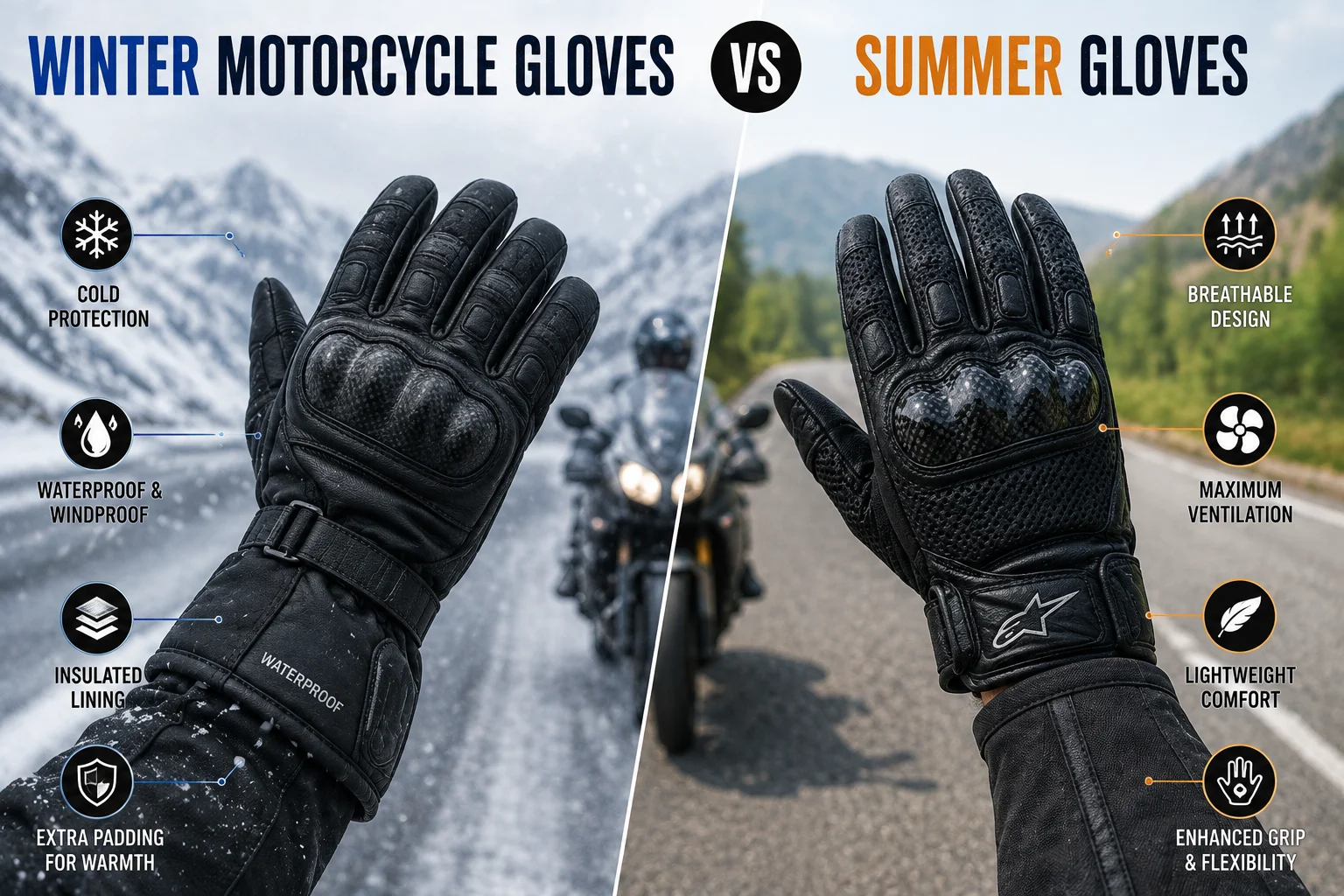
Riding without the right gloves is a mistake most riders make only once. Your hands take the first hit in any fall. They also feel every bit of heat, cold, and wind on every single ride.
The thing is, one pair cannot do everything. A glove built for January will roast your hands in July. And a summer mesh glove in cold weather? Your fingers go numb before you even hit the highway.
So before you buy your next pair, ask yourself this: do your gloves actually match the roads you ride and the weather you ride in?
Why Season-Specific Gloves Matter More Than Most Riders Think
Cold fingers aren’t only unpleasant to have. They can reduce your ability to operate the brake and clutch levers and control the throttle. Warm palms make it difficult to hold onto the bars. Both of them are harmful, and both are due to the incorrect type of glove.
Riding gloves are not an optional item. They are a precautionary measure. No matter the weather, the right pair can help keep your hands sharp and responsive.
Summer Motorcycle Gloves: Built for Heat
In the summer, heat is the foe of the rider. Your hands are sweaty, your grip becomes slippery, and thick gloves only exacerbate the problem. Summer motorcycle gloves fix all of that with lighter materials and better airflow.
They are not just thinner versions of regular gloves, though. It’s good to know what features really make a difference on a hot day out on the road before you select a pair.
Before picking a pair, it helps to know which features actually make a difference on a hot day out on the road.
What Good Summer Gloves Actually Offer
Perforated leather and mesh panels allow air to flow around your hands during riding. This constant flow prevents sweat from accumulating inside the glove.
Lightweight construction matters too. Heavy materials trap heat fast. Thin leather or a breathable textile blend keeps things comfortable even when the sun is fully out.
That said, lighter does not mean unprotected. Always look for CE-certified knuckle armor. A crash does not care what season it is.
Touchscreen-compatible fingertips are also worth having. Small thing, but you will appreciate it every time you stop to check a route.
The Sniper Motorcycle Gloves Leather Mesh handle summer riding well. Perforated panels keep air moving, the knuckles are armored, and the silicone palm grip keeps your hands steady on the bars even when it gets hot.
Winter Motorcycle Gloves: Built for Cold
Cold weather changes everything about how your hands feel and function. As temperatures drop, cold can make your fingers stiff and reduce comfort and control.Grip suffers quickly in heat. Fine control on the throttle and brake starts to go. That is when winter motorcycle gloves stop being optional.
These gloves are a completely different product from summer pairs. The whole point is keeping warmth in and keeping cold and wet out.
Knowing what to look for stops you from buying something that looks warm but fails you on a cold morning ride.
What Separates a Real Winter Glove from the Rest
Thermal lining is the heart of any good insulated motorcycle glove. It traps your body heat so fingers stay warm and responsive through the whole ride.
Waterproof membranes keep rain out. Once a glove gets wet in cold weather, warmth disappears almost immediately. A soaked winter glove is almost as bad as wearing none at all.
Windproof outer shell handles the speed factor. Highway wind chill at 60 mph drops the felt temperature fast. Good winter gloves block that before it reaches your skin.
Full-finger coverage with a snug wrist seal locks everything in. Gauntlet styles cover the sleeve gap too, which makes a bigger difference than most riders expect.
And yes, CE impact protection still needs to be there. Winter roads are just as dangerous as summer ones.
The Infinity Motorcycle Leather Gloves are worth checking out for cold-weather riding. Full leather build, armored knuckles, and a solid wrist strap. They hold warmth well and keep your grip feeling natural even when temperatures drop.
Winter vs Summer Gloves: The Real Differences
Both protect your hands. But how they do it is totally different. Here is where the two types actually split apart.
Airflow vs Warmth
Summer gloves move air. Winter gloves block it. There is no single glove that does both jobs fully without giving something up. A warm January glove will feel awful in July. A breezy summer glove will fail you in December. That tension is real and worth accepting before you shop.
Protection
This one does not change by season. Both types need CE-rated armor on the knuckles and palm. Never buy a seasonal glove that skips the safety rating just because it feels right for the weather.
The Delta Motorcycle Riding Gloves sit nicely in the middle. Good knuckle coverage, close fit, and a build that handles mild conditions without feeling like too much glove on the hand.
Materials
Summer gloves use perforated leather, mesh, or light textile. Winter gloves use full-grain leather or heavy textile with a thermal layer inside. Material is what drives every other difference between the two types.
Do Not Want Two Pairs? All-Season Gloves Exist
Not every rider has space or budget for two separate pairs. All-season motorcycle gloves fill the gap. They work best in spring and autumn when mornings are cold but afternoons warm up fast.
The ones worth buying have removable thermal liners. Cold morning? Keep the liner in. Warmer afternoon? Pull it out. Same glove, different setup.
The Molt Motorcycle Leather Gloves and Chill Motorcycle Leather Gloves both handle this kind of in-between riding well. Solid leather, good knuckle protection, and flexible enough for changing conditions without forcing you to choose an extreme.
Choosing the Right Pair for How You Actually Ride
The best glove is the one that matches your real riding conditions, not the most expensive one on the shelf.
Think About Your Weather First
Cold-state commuters need waterproof winter gloves that hold warmth through a full commute. Warm-climate riders need ventilated summer gloves that breathe properly. Riders in unpredictable weather do best with a transitional pair.
Your gloves also work better when the rest of your gear fits the season. A summer mesh jacket pairs naturally with breathable gloves for hot rides. A waterproof textile jacket makes more sense with a waterproof winter glove when the rain comes.
Fit Is Not Optional
If your glove doesn’t fit on your hand, it’s already broken. It should fit comfortably over the palm but not restrict blood flow. Fingers should go to the end of each section cleanly with no bunching or gaps.
Always check the motorcycle glove size chart and measure before ordering. Right fit means better grip, better feel on the controls, and fewer problems on long rides.
Looking After Your Gloves
After a few rides, wipe leather gloves down with a damp cloth. Condition leather monthly to keep it soft and prevent cracking. When using gloves for winter, apply waterproofing spray frequently as the membrane may fade with use. Do not store all gloves in direct sunlight. UV exposure and heat can damage glove materials over time.
FAQs
Can I wear winter motorcycle gloves in summer?
Grip suffers quickly in heat. Winter gloves trap warmth and cause heavy sweating. Slippery palms reduce bar control and raise your crash risk on warm weather rides noticeably.
Do summer gloves offer enough protection in a crash?
Yes, when CE-rated. Good summer gloves include reinforced knuckles and palm padding. Gloves may not be lightweight, but they are still well protected if they are constructed well and certified.
When do I need to change to winter motorcycle gloves?
Consider switching to winter motorcycle gloves when colder temperatures make your hands feel numb, stiff, or uncomfortable during rides.
What are the differences between leather vs mesh gloves?
Leather gloves are more resistant to abrasion and have a longer lifespan. Mesh allows more airflow during hot weather. Many summer gloves combine both to balance crash protection with the breathability warm rides demand.
Are all-season gloves worth buying instead of two pairs?
They work well through spring and autumn riding. For serious winter cold or peak summer heat, a dedicated seasonal glove will always outperform a compromise pair on extended rides.