
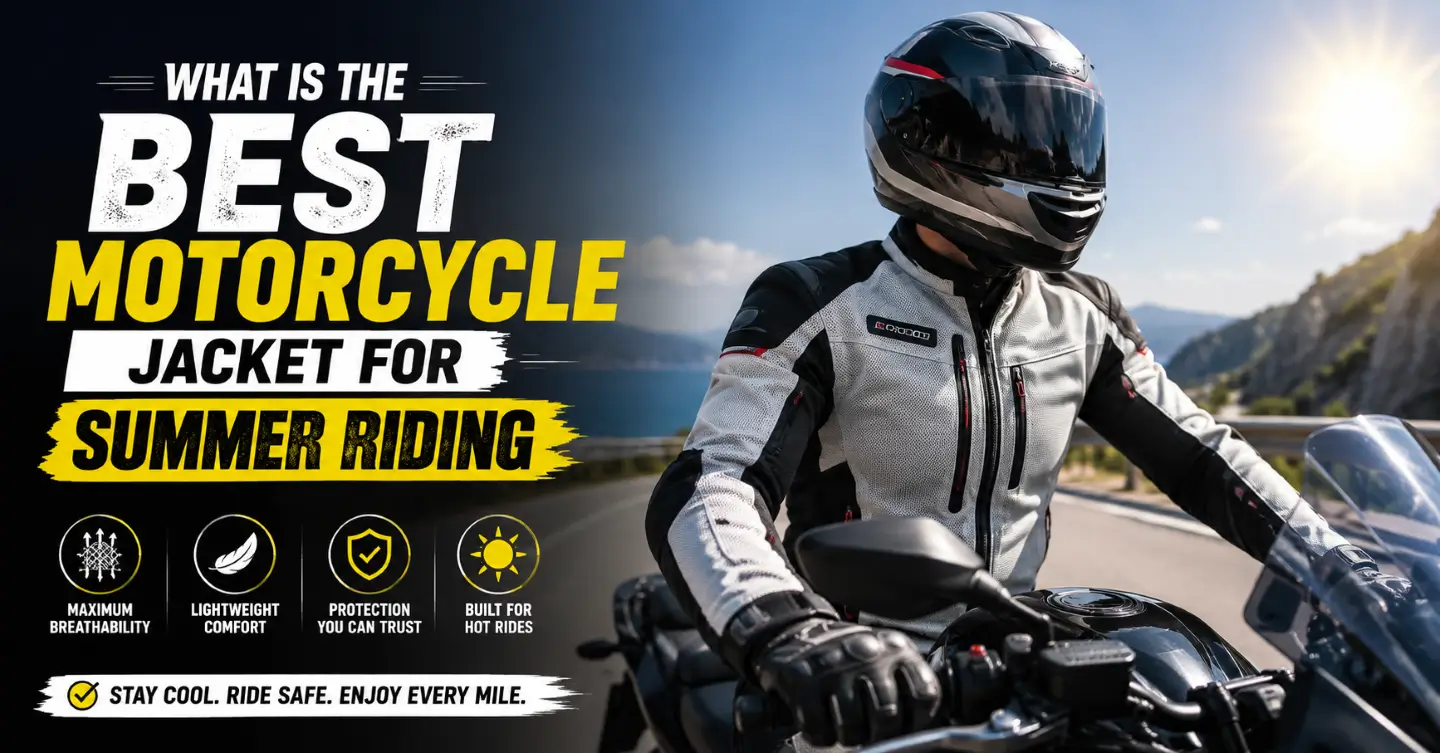
What is the Best Motorcycle Jacket For Summer Riding

The best motorcycle jacket for summer keeps airflow moving through your body at speed without compromising CE-rated armor placement at the shoulders, elbows, and spine. Three jacket types do this well: mesh jackets, perforated leather jackets, and ventilated textile jackets.
Which one makes sense for you comes down to riding speed, road type, and how much of your ride gets spent crawling through traffic.
Heat and Rider Performance on Summer Days
Heat exhaustion starts impairing your judgment before any physical symptoms show up. At 95°F, a running motorcycle engine pushes additional heat directly into your legs and core. Sitting in traffic on a 90-degree afternoon in a sealed leather jacket pushes the felt temperature close to 110 degrees in practice. That’s not just a comfort issue, slowed reaction times and reduced concentration on a motorcycle carry real consequences at any speed.
A non-ventilated jacket cuts airflow to nearly zero even at highway speeds. The jacket you pick for summer directly affects how clearly you’re thinking during the last stretch of a long, hot ride.
Mesh Motorcycle Jackets for Maximum Airflow
Mesh motorcycle jackets use open-weave fabric panels across the chest, back, and sleeves that push air directly over your body while you ride. A quality mesh jacket builds a structural frame of 600D polyester or similar material at the impact zones to maintain abrasion resistance where it matters. Everything else stays open to the wind.
Six Gear’s summer mesh jacket collection carries styles with CE-rated armor at the shoulders and elbows as standard equipment, not as an add-on. Removable waterproof liners zip in when turned. The one honest limitation of full-mesh construction: zero rain protection without the liner in place. On dry-climate summer rides, that trade-off makes complete sense.
Perforated Leather for Sport Riders
A perforated leather jacket punches thousands of small holes through the leather panels to create airflow without giving up the full abrasion resistance of solid leather. Leather slides across asphalt significantly longer before failing than mesh or textile at comparable crash speeds. For riders who corner hard or take the occasional track day, that slide protection is a real requirement, not a luxury.
The limitation is heat at slow speeds. Perforations generate meaningful airflow above 40 mph. Below that in city traffic, a perforated leather jacket still traps considerably more heat than mesh. Pair it with a moisture-wicking base layer to manage heat between stoplights on urban stretches.
Ventilated Textile Jackets for Variable Conditions
Ventilated textile jackets combine mesh panels with solid textile zones and zip-open vents on the chest and back. That combination handles temperature swings better than either pure mesh or leather alone. A rider leaving home at 65°F can open the vents progressively as afternoon temperatures climb toward 90 with no gear change needed at a fuel stop.
Most ventilated textile jackets include a removable waterproof liner as well. Pair any textile jacket with motorcycle pants that use matching ventilation systems for consistent thermal management from waist to ankle across the full ride.
What to Check Before Buying a Summer Jacket
Every summer jacket worth buying passes four checks. First, CE-certified armor at the shoulders and elbows as standard equipment not an optional upgrade. Second, a back armor pocket that fits at minimum a CE Level 1 back protector. Third, a pants connection zipper at the waist that prevents the jacket from riding up during a crash and exposing the lower back. Fourth, adjustable waist and cuff straps that lock the fit to your specific body position on the bike.
Jackets with elbow armor only and nothing at the shoulders miss the most common impact zone in road crashes. For anyone riding above 60 mph regularly, CE Level 2 armor at both shoulders and elbows delivers a meaningful difference in impact absorption compared to Level 1, often a 30 to 50 dollar difference and worth every cent.
FAQs
What type of jacket is best for summer motorcycle riding?
A mesh motorcycle jacket delivers the most airflow and suits the hottest conditions best. Perforated leather provides better abrasion resistance for sport riders who prioritize crash protection. Ventilated textile jackets balance airflow and weather versatility better than either of the other two options.
Do mesh motorcycle jackets actually protect you?
Yes. A quality mesh jacket provides real impact and abrasion protection. Mesh panels use 600D polyester or equivalent material at impact zones and carry CE-certified armor at the shoulders, elbows, and spine. The one thing mesh doesn’t provide is waterproofing until the liner goes in.
Is a perforated leather jacket worth it for summer riding?
It’s a great option for riders who want leather-level slide protection in warm weather. It performs best above 40 mph where the perforations create real airflow. In city traffic at lower speeds, it traps noticeably more heat than mesh making it a better fit for open-road riders than urban commuters.