
Motorcycle Safety Guide- 6 Essential Tips for Every Rider (2027 Guide)

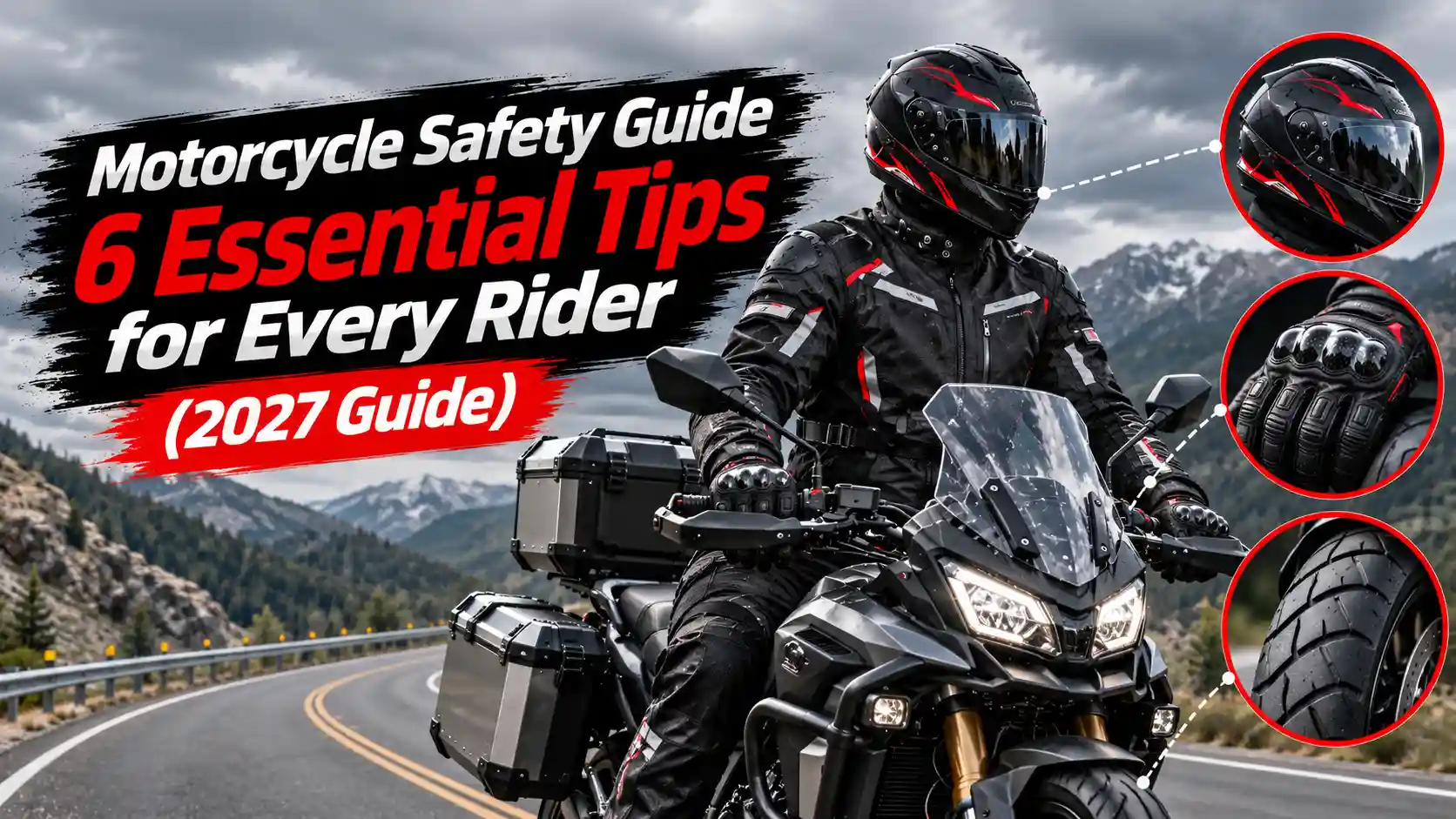
What are the essential motorcycle safety tips every rider should know?
Wear a certified full-face helmet and CE-armored gear, run a T-CLOCS check before each ride, ride as if drivers can’t see you, adjust for conditions, ride sober, and keep training.
With NHTSA recording 6,228 motorcyclist deaths and 86,887 injuries in 2024, these habits matter on every ride.
Motorcycle Safety at a Glance
- Gear: DOT/ECE full-face helmet, CE-armored jacket and pants, gloves, over-the-ankle boots
- Bike: T-CLOCS pre-ride inspection every time
- Road: Ride like you’re invisible, keep a 3-second gap, slow down at intersections
- Rider: Sober, rested and trained
1. Wear the Right Motorcycle Safety Gear
Helmet
Your helmet matters most. In 2023, 51% of motorcyclists killed in states without universal helmet laws were unhelmeted, compared with 10% in states with those laws.
A full-face motorcycle helmet with a DOT (FMVSS 218) label (ideally ECE 22.06 or Snell too) protects your face and chin as well as your skull.
Jacket, Pants, Gloves and Boots
Abrasion-resistant leather motorcycle jackets or heavy textile shield skin from road rash, while armor at joints absorbs impact. Choose CE-rated armor; Level 2 transmits less force than Level 1, as we explain in what CE ratings in motorcycle gear actually mean.
Finish with full-fingered motorcycle gloves and over-the-ankle boots. Remember, ordinary clothing isn’t designed to provide the same protection as motorcycle-specific apparel.
2. Practice Defensive Motorcycle Riding
Even when you follow traffic rules, you cannot control what other drivers do. Defensive riding helps you anticipate potential hazards instead of reacting when it’s already too late.
Develop these essential riding habits:
- Avoid blind spots: Never linger beside cars or trucks where their mirrors may not reveal your presence.
- Maintain a safe following distance: Keep at least a three-second gap behind the vehicle ahead, increasing it when visibility or road conditions deteriorate.
- Watch intersections: Look carefully for vehicles turning across your path, particularly cars making left turns.
- Choose your lane position wisely: Position your motorcycle where you can see traffic clearly and maintain an escape route.
- Keep scanning: Look ahead, check your mirrors regularly, and watch side streets for vehicles or pedestrians entering your path.
One useful habit is watching the front wheels of vehicles waiting at intersections. Their movement can sometimes reveal an approaching turn before the vehicle moves fully into your path.
3. Inspect Your Motorcycle Before Every Ride
A motorcycle in poor mechanical condition can quickly turn an ordinary journey into a dangerous situation. A few minutes of inspection before departure can help you identify problems before they become serious.
Follow the T-CLOCS inspection method:
| Inspection area | What to check |
| Tires and wheels | Tire pressure, tread depth, cracks and visible damage |
| Controls | Brakes, clutch, throttle and cables |
| Lights and electrics | Headlights, brake lights, indicators and horn |
| Oil and fluids | Engine oil, coolant and brake fluid, where applicable |
| Chassis | Frame, suspension and visible structural damage |
| Stands | Side stand, center stand and their operation |
Also, check your chain tension and lubrication if your motorcycle uses a chain drive. Keep your headlights and signals working properly, and never ignore unusual noises or changes in handling. If something seems wrong, have it inspected by a qualified mechanic before riding.
4. Adjust Your Riding to Weather and Road Conditions
Weather can change quickly, and even familiar roads become unpredictable when conditions deteriorate. Rain, strong winds, loose gravel and slippery surfaces all require extra attention.
When riding in challenging conditions:
- Reduce your speed and avoid sudden acceleration, braking or sharp steering movements.
- Increase your following distance to allow more time to respond.
- Be cautious around painted road markings, metal surfaces, oil patches and standing water.
- Wear suitable waterproof clothing to stay comfortable and maintain concentration.
- Pull over somewhere safe if heavy rain, strong winds or poor visibility make riding unsafe.
Many crashes happen because a driver didn’t see the rider. Choose bright colors, add reflective strips, or wear a high-visibility safety vest over your jacket, and keep your headlight on day and night.
The right equipment also makes a difference. Our motorcycle rain gear collection offers options for wet-weather protection. You can also read our guide on riding a motorcycle in the rain for more practical advice.
5. Stay Alert, Sober and Within Your Limits
Good riding skills mean little if your concentration isn’t where it should be. Fatigue, distractions and impaired judgment can affect your reaction time and decision-making.
Before getting on your motorcycle, remember to:
- Never ride under the influence of alcohol or drugs.
- Avoid riding when you’re exhausted or struggling to concentrate.
- Keep your phone out of your hands and avoid unnecessary distractions.
- Take regular breaks during long-distance journeys.
- Stay within your experience level rather than attempting unfamiliar manoeuvres in traffic.
New riders should also consider professional motorcycle safety training. Practising emergency braking, cornering and obstacle avoidance in a controlled environment can build confidence and improve your riding skills.
6. Prepare for Unexpected Road Situations
Not every road hazard comes with a warning. A car may suddenly change lanes, a pedestrian may step into the road, or debris may appear around a corner.
The key is to anticipate problems before they become emergencies. Keep enough space around your motorcycle to adjust your position when necessary, and identify possible escape routes as you ride. Practise emergency braking and evasive manoeuvres with qualified instruction rather than experimenting in traffic.
It’s also sensible to carry a charged phone and basic emergency supplies. Above all, never let another rider’s speed or pressure push you beyond your abilities.
Final Thoughts- Ride Prepared, Ride Safe
Motorcycle safety comes from layers: certified gear, a checked bike, defensive habits and ongoing training. Wear proper protective gear, maintain your motorcycle, stay alert and make responsible decisions.
These everyday habits can help you enjoy the road while managing the risks that come with riding. Build them into every trip, and you’ll enjoy the road with far less risk.