
Motorcycle Lane Positioning- How to Choose the Safest Position

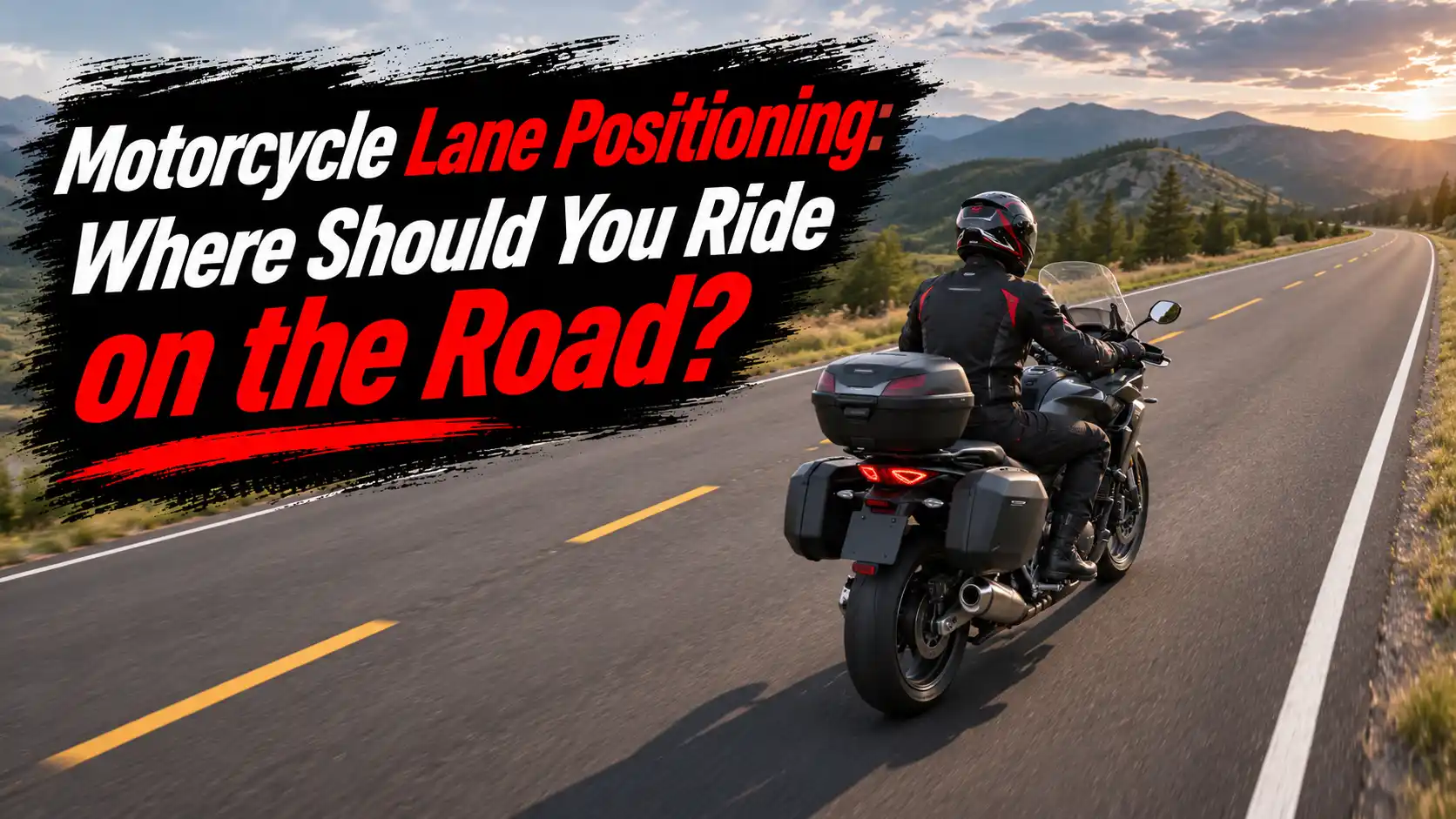
There is no single best spot. Riders divide each lane into three paths: left (Position 1), center (Position 2) and right (Position 3).
The left third is the usual default because it keeps you visible in the mirrors of the car ahead, but the safest position is whichever one gives you the best view, the most space and the most visibility at that moment.
Motorcycle Lane Positioning at a Glance
- Position 1 (left third): Default for most riding; visible in mirrors, blocks lane-sharing
- Position 2 (center): Good on wide, clear roads; watch for the oil strip
- Position 3 (right third): Right turns and a buffer from oncoming or left-side traffic
- Golden rule: Move between positions as traffic, surface and visibility change
The Three Motorcycle Lane Positions Explained
A motorcycle uses only part of a lane, so each path offers different strengths and weaknesses.
Position 1- Left Third of the Lane
The left wheel track puts you in the driver’s side mirror of the car ahead, gives you a clear view past it, and keeps you far from car doors and pedestrians on the right.
It also works as a “blocking position” that discourages drivers from sharing your lane. On undivided two-lane roads, though, it brings you closer to oncoming traffic.
Position 2- Center of the Lane
The center offers equal space on both sides, which helps on wide roads. However, it collects oil and debris dripped by cars, especially near intersections, and turns slick in the rain, so take care when wet, as our guide on whether you can ride a motorcycle in the rain explains.
Position 3- Right Third of the Lane
The right wheel track gives you distance from oncoming traffic and vehicles in the left lane. Its downside is reduced visibility to cars entering from the right, plus closeness to parked cars and curbside gravel.
How to Choose the Right Lane Position
Judge every position on three things: see, be seen, and keep space. Here’s how that plays out:
| Situation | Best position | Why |
| Following a car | 1 (left) | Visible in its mirror, clear view ahead |
| Parked cars on the right | 1 (left) | Distance from opening doors |
| Oncoming truck on a two-lane road | 3 (right) | Buffer from the truck and its wind blast |
| Car waiting to pull out on the right | 1 or 2 | Space and more time to react |
| Preparing a right turn | 3 (right) | Signals your intent, sets up the turn |
| Stopped in traffic | 1 or 3, offset | Escape path if the car behind doesn’t stop |
| Wet or oily surface | Wheel tracks | Avoids the slick center strip |
Lane Positioning in Real-World Situations
Real rides mix these scenarios, so keep adjusting.
Two-Lane Roads
Position 1 helps oncoming drivers see you before turning left across your path. When a large vehicle approaches, move to Position 3 early to build space.
Multi-Lane Highways
Claim your whole lane so no one tries to share it, and avoid lingering beside trucks, as our guide to motorcycle blind spots explains.
Curves and Corners
Enter on the outside of the turn, hold it until you can see the exit, then move toward the inside. This late apex gives you the longest view through the bend.
Intersections and Stops
Pick the position with the best view of cross traffic. When stopping, wait to one side of the car ahead, in gear, watching your mirrors. Firm, oil-resistant motorcycle boots help you plant your feet securely on slick pavement.
Group Riding
Use a staggered formation: the leader rides in Position 1, the next rider in Position 3, and so on, with about one second between staggered riders and two seconds to the bike directly ahead.
Common Lane Positioning Mistakes
- Sticking to one position while traffic changes around you
- Stopping on the oily center, where fluids pool
- Hiding behind large vehicles, where you can’t see or be seen
- Moving without a head check before changing position
Lane Position Works Best With Visibility Gear
Good positioning puts you where drivers can see you, and the right gear makes sure they do. A bright full-face helmet catches mirror glances, while a high-visibility safety vest adds reflectivity at dusk. For a wider look at gear and riding habits, read our motorcycle safety guide.
Ride Your Lane With Purpose
Lane positioning is an active skill, not a fixed habit. Keep asking where you can see, be seen and keep space, and your position will protect you on every ride.
What is the safest lane position for a motorcycle?
There is no universally safest position. Choose the part of the lane that gives you the best visibility, traction, space cushion, and room to maneuver in the current situation.
What are the three motorcycle lane positions?
They are Position 1 (left third), Position 2 (center third), and Position 3 (right third). Riders use these paths to adjust their position according to traffic and road conditions.
Should motorcycles always ride on the left side of the lane?
No. The left side can be useful in some situations, but traffic, parked vehicles, road hazards, and visibility may make the center or right side a better choice.
Is the center of a motorcycle lane dangerous?
Not automatically. Oil and grease can collect in the center, particularly at busy intersections, but the actual surface condition matters. Avoid slippery buildup and adjust your path when traction is poor.
What is blocking position in motorcycle riding?
It means riding slightly to one side of the lane to maintain space and discourage other vehicles from squeezing alongside you. The correct position depends on surrounding traffic and hazards.