
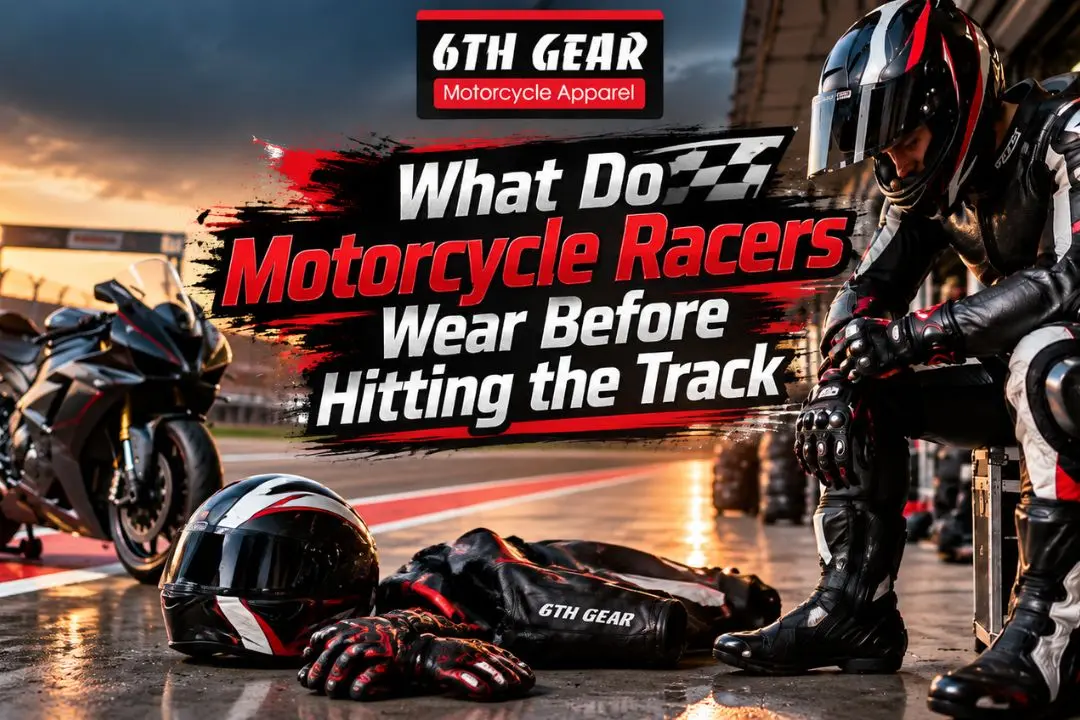
What Do Motorcycle Racers Wear Before Hitting the Track

Speed gets all the attention on race day. But the right gear protects a rider when things go wrong. From a one-piece leather suit to a full-face helmet, every piece has a clear purpose. Racers also rely on armored gloves, racing boots, and back protection to handle high-speed crashes. But what exactly do motorcycle racers wear before they hit the track?
The Leather Racing Suit Of Motorcycle Racers
The motorcycle race suit is the backbone of a racer’s outfit. It covers the arms, legs, torso, shoulders, elbows, and knees in one go. Most road racers wear a one-piece leather suit. It fits close to the body to cut wind drag at high speed.
These suits are made from cowhide or kangaroo leather. Kangaroo leather is lighter and more flexible. It holds up better during a slide on asphalt. The suit has CE-certified armor built into the elbows, shoulders, and knees. This armor is designed to absorb impact energy during a crash.
Inside the suit, a moisture-wicking lining pulls sweat away from the skin. Stretch panels at the joints let the racer move freely without the suit pulling or tearing. It is tight but it is never stiff.
The Full Face Helmet That Guards the Entire Head
A racer never goes on track without a full-face helmet. It locks around the chin, jaw, and face. That chin bar matters more than people think. A lot of the worst facial injuries in crashes happen right there at the jaw line.
Racing helmets are built from carbon fiber or ABS shell. They are lightweight but incredibly strong on impact. Inside sits a layer of EPS foam that absorbs the force when the head hits something hard. The visor does not scratch easily and keeps vision clean even when the light shifts on track. Built-in air channels stop the visor from fogging up when the racer needs to see most.
Most top riders show up to a race weekend with four helmets. Weather changes. Visors get scratched. Having a backup is not optional at that level.
What to look for in a racing helmet:
- Full-face design to protect the chin, jaw, and face
- ECE 22.06 or Snell certification to meet safety standards
- Anti-fog visor for clear vision in all conditions
- Carbon fiber or ABS shell for lightweight impact resistance
Racing Gloves That Protect Hands From Road Rash
Hands hit the ground first in almost every crash. It is a natural reflex. Without proper motorcycle racing gloves, asphalt removes the skin from the palm and fingers in under a second.
Racing gloves have hard armor over the knuckles. A plastic palm slider takes the friction instead of the skin. A wrist strap locks the glove in place so it stays on during impact. Perforated leather keeps air moving so hands stay dry and grip stays firm throughout a long session.
Key features in racing gloves:
- Knuckle armor for direct impact zones
- Palm sliders to reduce road rash on asphalt
- Wrist strap to keep the glove locked during a crash
- Perforated leather for airflow and grip comfort
Racing Boots That Are Built Around Ankle Safety
Ankles are highly vulnerable in a crash. Regular riding boots do not belong on a race track. Racing boots are engineered specifically around ankle protection.
How a Racing Boot Is Built Differently
A racing boot has a carbon fiber inner shell separate from the outer leather layer. The outer layer handles abrasion. The inner shell stops the ankle from rotating sideways on impact. It allows natural forward and backward movement but blocks lateral motion. That one design feature prevents serious ankle fractures and ligament tears.
Anti-slip rubber soles grip the footpegs at extreme lean angles. Toe caps and ankle cups protect the hardest-hit zones. A micro-mesh lining keeps feet cool during long race days.
From your suit down to your feet, boots complete the full-body system every racer depends on.
The Back and Chest Protector That Stops Serious Neck Injuries
The back protector stops the spine from bending past its safe limit during a crash. Without it, a hard impact can force the spine into a position that causes permanent damage. The chest protector covers the ribs and sternum from direct front impacts.
Most professional racers use a CE Level 2 back protector. That is the highest absorption rating available. Many suits have both panels built in. Others use a separate vest that covers both areas in one unit.
Add Safety Guards and Accessories if your suit does not have built-in armor.
What Road Racers Wear Compared to Dirt Bike Racers
The surface changes the entire gear setup. Here is how the two compare:
Road and Track Racers wear:
- One-piece leather suit with CE armor and airbag system
- Full-face carbon fiber helmet with anti-fog visor
- Armored gloves with palm sliders
- Stiff carbon-lined racing boots
- CE Level 2 back and chest protector
Dirt and Motocross Racers wear:
- Separate jersey and armored riding pants
- Helmet with goggles instead of a visor
- Hard-shell chest protector worn over the jersey
- Knee braces under the pants
- Off-road boots with more ankle flex
Road racers need full leathers because asphalt creates extreme friction during a slide. Dirt bike gear focuses on ventilation and range of motion because off-road terrain demands constant body movement.
FAQs
Do motorcycle racers have to wear a one-piece suit?
In professional road racing, yes. A one-piece suit stays on the body during a crash. A two-piece can separate at the waist and expose the lower back to asphalt.
What material are motorcycle racing suits made from?
Kangaroo leather for professional level. Cowhide for mid-range suits. Both are far stronger than any textile or synthetic option.
Are racing gloves different from regular gloves?
Yes. Racing gloves have harder knuckle armor, palm sliders, and a locked wrist strap. Regular gloves are built for comfort, not crashes.
Is a back protector necessary?
Yes. A CE Level 2 back protector prevents spinal injuries that can be permanent. It is one of the most important pieces of racing protective gear a rider can wear.
Can regular riders wear racing gear?
Yes. Racing gear gives the highest protection level available. It is ideal for track days and highway riding where speed and risk are higher.