
How Often Should You Replace Motorcycle Gear?

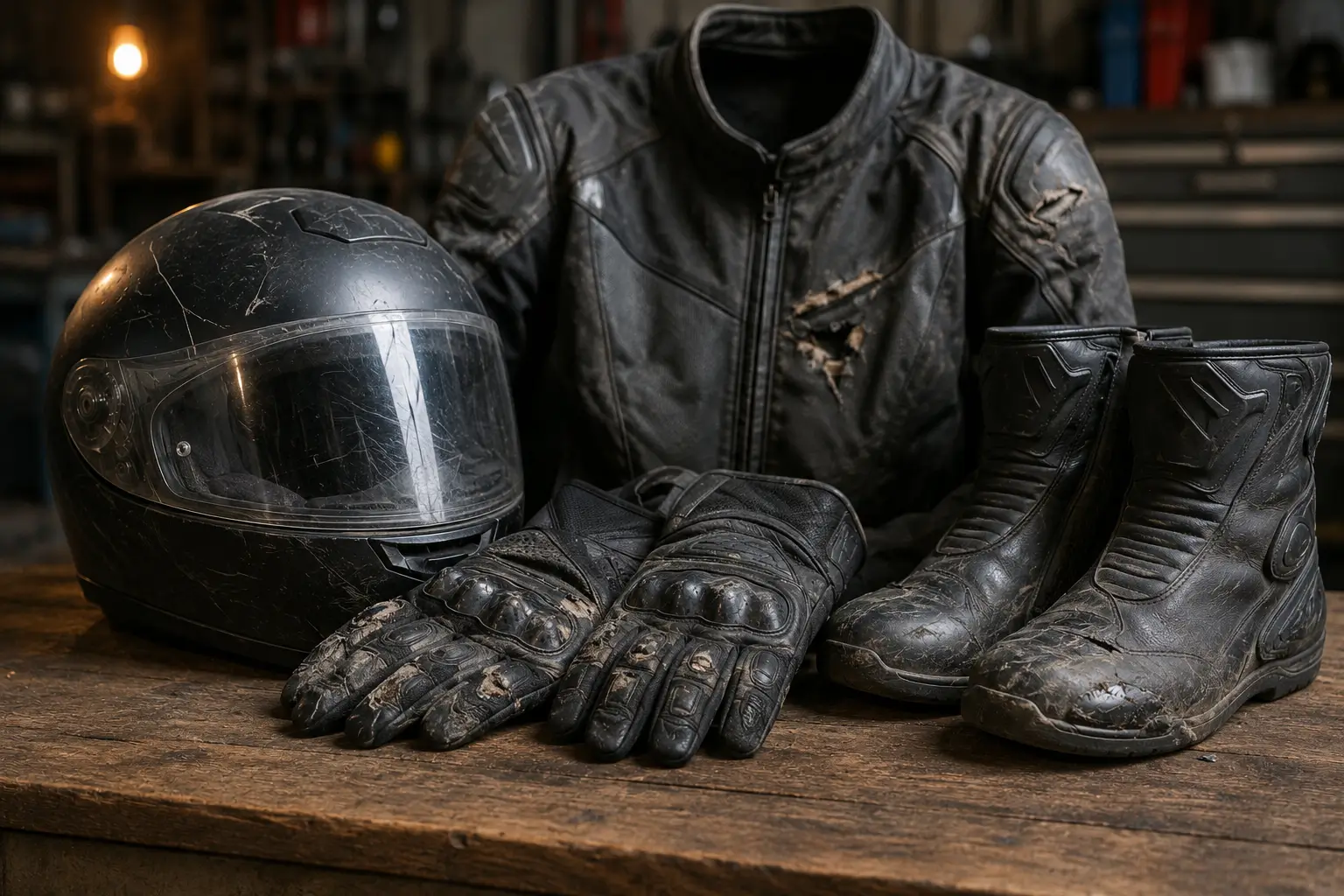
Your motorcycle gear is the only thing standing between you and the road. But here is what most riders get wrong. Worn-out riding gear can look completely fine and still fail when you need it most. How often to replace motorcycle gear is something every rider should know before their next ride.
UV rays, sweat, crashes, and daily use all quietly break down your protection. Most riders only replace gear when it looks bad. By then, it is already too late. So when was the last time you actually checked if your gear still protects you?
Why Old Motorcycle Safety Gear Is a Bigger Risk Than Most Riders Think
Old gear does not announce itself. It just quietly fails. Riding jacket protection breaks down from the inside, not the outside. A jacket can look fine while its armor or protective materials have degraded over time. Same with helmets.
The foam liner inside degrades year after year whether you crash or not. UV light does it. Heat does it. Even just time does it. Keeping old gear because it still looks good is one of the most common mistakes riders make.
What Actually Decides How Long Motorcycle Gear Lasts
Not every rider’s gear ages the same way. A guy riding daily in Texas heat goes through gear twice as fast as someone doing Sunday rides in cooler weather. Motorcycle gear lifespan depends on real conditions, not just a number on a calendar.
Here are the two things that eat through gear faster than anything else.
How Much You Ride and What Weather You Ride In
More miles means more wear. Simple as that. But weather makes it worse. UV exposure breaks down fabric coatings and foam. Rain weakens stitching. Dust and road grime grind into seams over thousands of kilometers. Daily riders often do not notice because the wear is so gradual.
Sweat, Hidden Impact Damage, and Bad Storage Habits
This one surprises people. Regular exposure to sweat, moisture, and dirt can contribute to wear over time. Poor storage can make things worse, especially when gear is left damp or exposed to heat and humidity. A drop from even waist height can crack the internal structure of a helmet invisibly. And storing damp gear in a garage or bag? That is mold and rot waiting to happen.
Helmet Replacement: Every 3 to 5 Years or the Moment You Crash
The motorcycle helmet is the one piece of gear with zero tolerance for delay. Many manufacturers recommend replacing helmets after several years of regular use. Check the manufacturer’s replacement guidance, and replace the helmet immediately after a significant impact.
Get a new helmet immediately if:
- Your head made contact during any crash, at any speed
- There are cracks, chips, or a liner that moves around inside
- The fit feels looser than when you bought it
- It is past 5 years old, sitting in a cupboard or not
Six Gear carries full-face, open-face, and 3/4 helmets designed to meet real road impact standards. Not just to look good on a shelf.
Jacket and Pants Replacement: Material Decides the Timeline
Motorcycle jacket lifespan does not follow one fixed timeline. The material, riding frequency, weather exposure, washing, storage, abrasion, and crash history can all affect how long your gear remains protective.
Instead of replacing your jacket or pants based only on age, inspect them regularly for signs of wear. Check the shoulders, elbows, knees, hips, seams, zippers, and other high-wear areas.
Browse motorcycle jackets and riding pants built from materials that are actually tested for abrasion and impact before they get packaged.
Gloves Wear Out by Mileage, Not Just Age
Gloves are unique. Every other piece of gear ages mainly by time and crashes. Motorcycle gloves wear out by pure use. They are touching your grips, levers, and bars on every single ride. The palms go first. When palm padding and abrasion protection wear to about half their original thickness, those gloves are done protecting your hands.
For a regular rider, that point arrives somewhere around 12,000 miles. Riding in wet conditions or wearing thin summer gloves pushes that number down fast.
Boots Do Not Have a Schedule. They Have Warning Signs.
Motorcycle boot replacement does not follow a yearly calendar. You replace them when the boot tells you it is done. And it will tell you if you know what to look for.
Replace your boots when:
- The sole is peeling away from the upper or the tread is completely smooth
- The boot bends too easily side to side. Ankle support is gone.
- Stitching along the upper is separating or fraying
- Inside armor panels feel loose or have cracked under pressure
Boots that feel like sneakers are not protecting your ankles.
Body Armor and Protective Pads: Plan on Replacing Every 3 to 5 Years
Press your chest guard or knee armor right now. Push your thumb firmly into the foam. Did it spring back fast and firm? Good. Did it stay dented or feel soft and spongy? That CE armor is no longer doing its job. It looks the same. But the energy-absorbing ability is gone.
Replace body armor and impact protectors when you notice:
- Hard shells that crack or dent under light pressure
- Foam that compresses and stays compressed
- Velcro or buckle straps that no longer hold the piece in the right position
- Any material that is peeling, heavily faded, or was involved in a crash
Even light use means armor replacement around the 3 to 5 year mark. Do not wait for it to fall apart during a slide to find out. Find safety guards and armor that meet protection standards in the Six Gear accessories section.
Small Habits That Keep Motorcycle Gear Working Longer
Gear care does not take much time. But skipping it costs you replacement money faster than anything else.
- Wash with mild soap only. Bleach and strong detergents destroy the protective coating on fabrics.
- Never store gear damp. Hang it to fully air-dry first, every single time.
- Keep gear in a cool, dry spot away from windows and heat sources.
- A little zipper lubricant every couple of months stops zippers from failing mid-season.
- Check armor, buckles, and straps before long trips. Not after.
- Never toss a helmet onto a seat or bench. Even a drop from a low height can crack the liner you cannot see.
FAQs
Q: How often should a motorcycle helmet be replaced?
Regularly, every 3-5 years. Any head-contact crash, regardless of the newness of the helmet, should be replaced.
A: How do you know when to replace your motorcycle jacket?
With proper care, leather can last from 10 to 20 years. The life of a textile jacket is 5 to 10 years. Change more often if there are any cracks in the armor or general thinning of fabric in high-traffic areas.
How do you know when to replace your riding gloves?
That usually occurs around 12,000 miles on the clock for regular riders. That typically happens near the 12,000-mile mark for regular riders.
Q: Do motorcycle boots expire?
No fixed date. Change when the sole separates, stitching splits or when the boot begins to bend easily at the ankle.
Q: How long does motorcycle body armor last?
Plan on 3 to 5 years for most CE-certified armor. Replace after any crash or when foam no longer bounces back after being pressed.
Q: How can you make riding gear last longer?
After riding, clean it properly, dry it completely before storing it, store it out of the sun and heat and check it before long rides.