

Motorcycle Road Hazards- 8 Common Dangers Every Rider Should Know

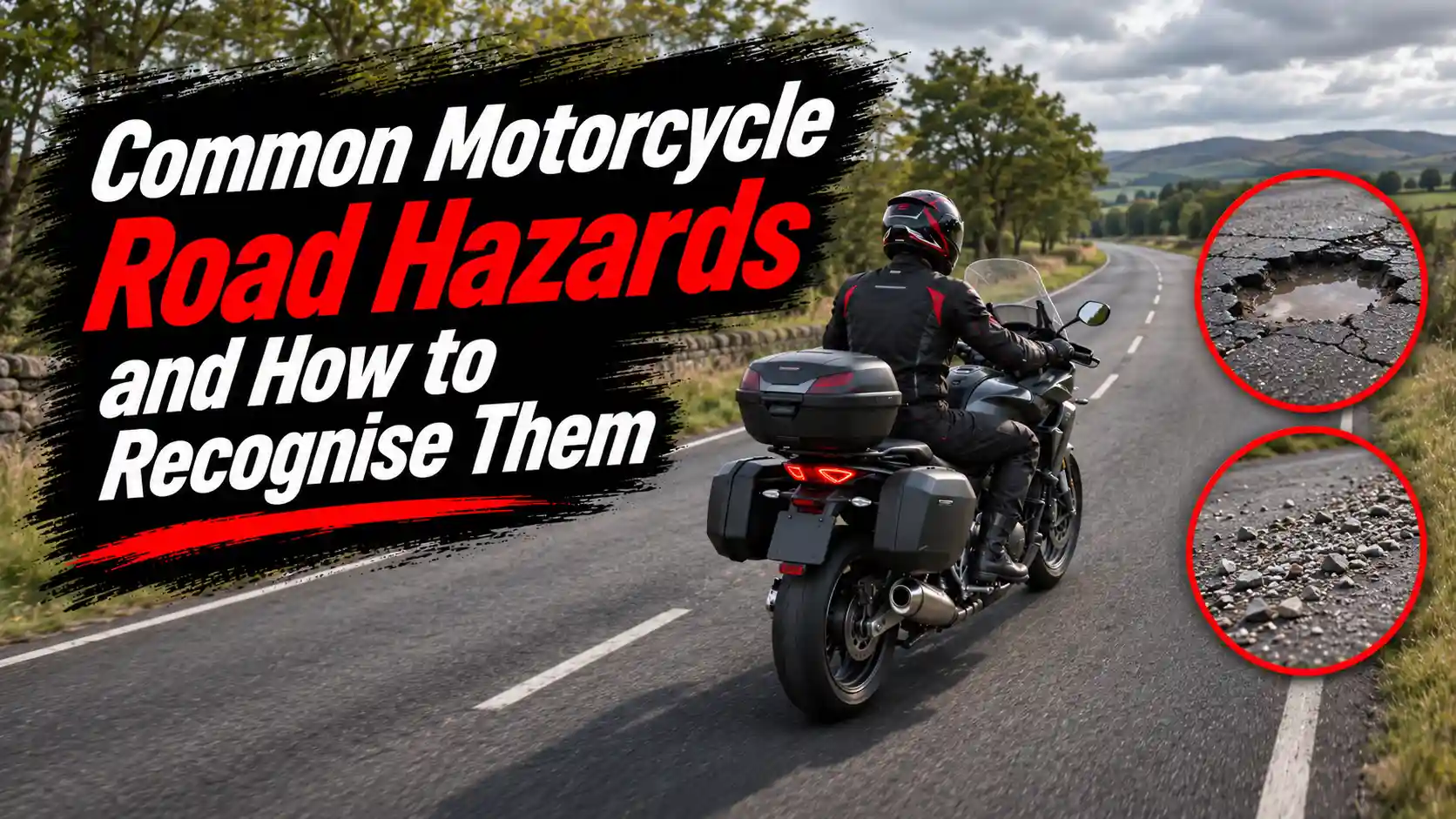
What are the most common motorcycle road hazards? Motorcycle road hazards include potholes, loose gravel, slippery surfaces, road debris, railway tracks, strong winds, animals, and careless drivers.
These dangers can affect your motorcycle’s traction, balance, braking, and visibility, sometimes giving you very little time to react.
Unlike cars, motorcycles rely on just two tires to maintain balance and grip. Even a small patch of gravel or an unexpected pothole can make a routine ride challenging.
The good news? Learning to recognize these dangers early and responding calmly can help you stay in control and make safer riding decisions.
What Are the Most Common Motorcycle Road Hazards?
Road hazards come in different forms. Some affect your tires, while others can block your path or make it harder for drivers to see you. Here are the dangers every rider should watch for.
1. Loose Gravel, Sand, and Road Debris
Loose gravel, sand, small stones, and broken branches can reduce tire grip, especially when you are turning or braking. These materials often collect along road edges, near construction areas, and on curves.
Even a small gravel patch can make your motorcycle feel unstable. Slow down before reaching it, keep your movements smooth, and avoid sudden braking or sharp steering while crossing the loose surface.
2. Potholes and Uneven Pavement
Potholes, cracks, broken asphalt, and uneven road repairs are common motorcycle hazards. Hitting a deep pothole can disturb your balance, damage a wheel, or affect your suspension.
Keep your eyes up and scan the road ahead so you have time to avoid larger obstacles safely. If you cannot avoid a manageable bump, slow down beforehand, keep the motorcycle as upright as possible, and let your knees and elbows absorb the impact.
Check your tires and rims afterward if you hit something hard.
3. Wet Roads, Oil Spills, and Slippery Surfaces
Rain can make roads slippery, particularly when it first begins after a dry period. Water can mix with oil and road grime, reducing the grip available to your tires.
Other slippery surfaces include:
- Wet leaves and grass clippings
- Diesel, petrol, and oil spills
- Mud, sand, and antifreeze
- Painted road markings and crosswalks
- Metal manhole covers and steel plates
Reduce speed before reaching these areas. Avoid sudden braking, acceleration, or sharp turns, and keep your motorcycle as upright as practical while crossing a slippery patch.
If rain catches you on the road, suitable motorcycle rain gear can help you stay dry and comfortable without distracting you from the ride.
4. Railroad Tracks and Metal Road Joints
Railway tracks, tram lines, bridge joints, and metal grates can be particularly challenging for motorcycles. Wet metal surfaces may offer less traction, while tracks running parallel to your direction of travel can catch or redirect a tire.
When crossing tracks that run across the road, approach them as straight as the road layout safely allows. If tracks run parallel to your path, cross at a distinct angle rather than trying to follow the grooves. Slow down beforehand and avoid hard braking or turning while on the tracks.
5. Tar Snakes and Painted Road Markings
Tar snakes are dark strips of sealant used to repair cracks in asphalt. They may become soft or slick in hot weather or when wet, making them especially concerning when your motorcycle is leaned into a turn.
Painted lane markings, arrows, and crosswalks can also become slippery when wet. Watch for changes in pavement color and texture, reduce speed when necessary, and avoid sudden movements over these surfaces.
6. Wind Gusts and Large Vehicles
Strong crosswinds can push your motorcycle away from its intended path, particularly on open highways, bridges, and exposed roads. Passing large trucks can create another challenge because their air turbulence may affect your stability.
Keep a relaxed but controlled grip on the handlebars, maintain a suitable speed, and leave extra room around large vehicles. Avoid lingering beside trucks, where visibility and maneuvering space may also be limited.
7. Animals and Unexpected Obstacles
Dogs, deer, livestock, and other animals can suddenly enter the road, especially in rural areas. Fallen branches, loose cargo, and objects dropped by other vehicles can create similar surprises.
Slow down when riding through areas where animals are common. If an animal appears, avoid making a sudden, uncontrolled swerve into oncoming traffic or another hazard. Brake smoothly when possible and choose the safest available path.
8. Traffic, Blind Spots, and Intersections
Not every motorcycle road hazard comes from the road surface. Distracted drivers, unsafe lane changes, tailgating, and vehicles turning across your path can create serious risks.
Intersections deserve particular attention because drivers may fail to notice an approaching motorcycle or misjudge its speed. Stay visible, maintain a safe following distance, and be ready for a vehicle to turn or pull out unexpectedly.
How to Handle Motorcycle Road Hazards Safely
Recognizing a hazard is only half the job. Your response matters just as much. These practical habits can help you deal with unexpected road conditions.
Look Far Ahead and Scan the Road
Don’t focus only on the pavement immediately in front of your tire. Keep your eyes moving and scan farther down the road, checking for traffic changes, potholes, debris, and other warning signs.
If parked vehicles, trees, or bends block your view, reduce speed until you can see more of the road ahead.
Adjust Your Speed Before Reaching a Hazard
Slow down early rather than waiting until you are directly on top of an obstacle. This gives you more time to choose a safe path and reduces the need for sudden braking or steering.
Your motorcycle stopping distance also increases when traction is poor, so leave extra room in wet or slippery conditions.
Keep Your Movements Smooth
Abrupt acceleration, braking, or steering can make it harder to maintain traction on loose or slippery surfaces. Use gradual inputs, keep your eyes up, and avoid unnecessary changes in direction.
Choose Your Lane Position Carefully
The safest part of a lane can change depending on the road. Avoid visible oil, loose gravel, pooled water, and damaged pavement. Your motorcycle lane positioning should give you a clear view, enough space from nearby vehicles, and room to respond.
Wear Suitable Protective Gear
Protective equipment cannot prevent every crash, but it can help reduce injuries if one occurs. A properly fitted helmet, gloves, protective jacket, riding pants, and ankle-covering boots are important parts of your riding setup.
For more preparation advice, explore this motorcycle gear checklist for beginners. Riders who want additional visibility can also consider a reflective motorcycle mesh jacket, especially when riding in changing light conditions.
Motorcycle Road Hazards in Different Weather Conditions
Weather can change the condition of a road faster than many riders expect.
- Rain: Wet asphalt, painted lines, metal covers, and oily patches can reduce traction. Slow down, increase your following distance, and avoid sudden inputs.
- Hot weather: Fresh tar and crack sealants may become soft or slick. Watch for dark repair strips, especially on curves.
- Cold weather: Frost and ice can form in shaded areas, on bridges, and near overpasses. Avoid riding over icy surfaces whenever possible.
- Strong winds: Crosswinds and turbulence from large vehicles can affect your line. Reduce speed when necessary and leave extra space.
Final Thoughts
Motorcycle road hazards can appear almost anywhere, from a pothole on your daily commute to a slippery metal cover on a rainy highway. The key is to expect changing conditions instead of assuming the road ahead will always be clear.
Look ahead, slow down when necessary, keep your movements smooth, and maintain enough space to react. Combine these habits with proper protective gear and regular motorcycle maintenance, and you will be better prepared for the unexpected. Every safe ride begins with awareness.
Frequently Asked Questions
What is the most dangerous road hazard for motorcycles?
There is no single most dangerous hazard in every situation. Slippery surfaces, potholes, loose gravel, intersections, and inattentive drivers can all create serious risks. The danger depends on speed, road conditions, visibility, and the rider’s ability to respond.
Why is gravel dangerous for motorcycle riders?
Gravel reduces the grip between tires and the road. This can make braking, turning, and accelerating more difficult, particularly when gravel collects on curves or near road edges.
How should a motorcycle cross railroad tracks?
When tracks run across the road, approach them as straight as the road safely allows. When tracks run parallel to your direction of travel, cross at a distinct angle. Slow down beforehand and avoid sudden braking or turning on the tracks.
Is the first rain after dry weather dangerous for motorcyclists?
It can be. Rain may mix with oil, dust, and other road residue, making the surface slippery. Ride more slowly, increase your following distance, and use smooth control inputs.
How can I avoid motorcycle road hazards?
Scan the road ahead, maintain a safe speed, leave enough following distance, keep your motorcycle maintained, and adjust your lane position around hazards. Regular rider training can also help you develop better hazard-awareness and control skills.